1950s HOUSES
A 1950s home.
Trace changes.
Buying a 1950s semi or former council house? Find out how to check its original construction, request repair records and choose a survey for the house you saw.
Ask about unfamiliar construction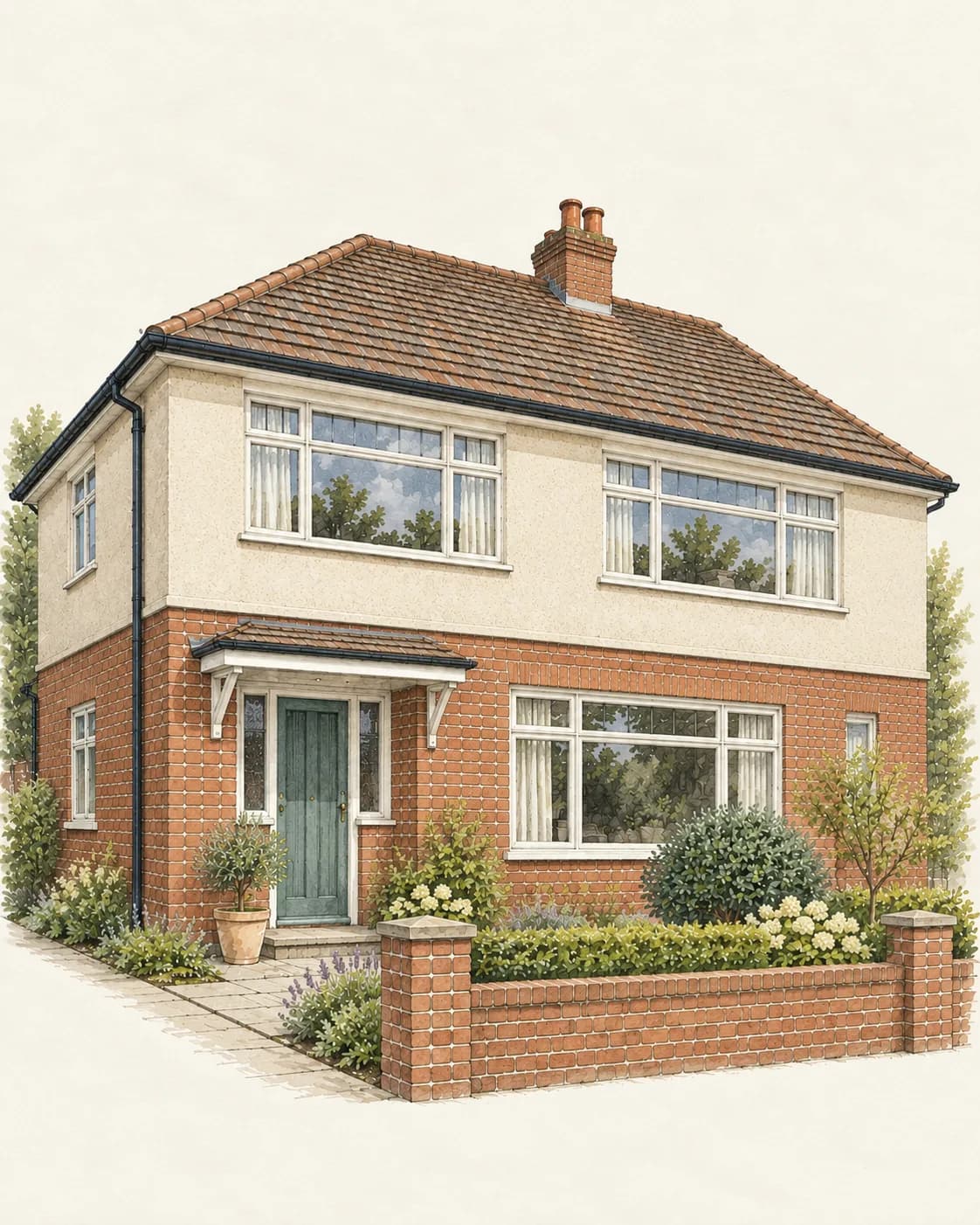
POST-WAR / IDENTIFY THE SYSTEM
Same decade.Different construction.
- 01Roof
Arrangement and alterations.
- 02Walls
The actual structural system.
- 03Floor
Evidence beneath the finish.
Fictional architectural illustration. Illustrative study · not a diagnosis or construction specification.
The answer
What was built here, and what changed later?
For a 1950s house, start with the original construction, the work carried out since and the places the surveyor can inspect. Give the practice the listing, any named building system and the documents the seller has. Two neighbouring semis can need different investigations if one has been extended, repaired or reclad.
At the viewing
Questions to take with you
- 01
Ask how the seller knows the construction
“Brick-built” might describe a visible outer finish. Ask whether the seller has original plans, previous survey wording, council sale documents or a repair certificate identifying the house. Check that every record refers to the right address and extent of work.
- 02
Sketch the original outside wall
A side passage may now be a kitchen, utility room or downstairs bathroom. Find the line where the old building ends and ask which openings were formed or enlarged. Your surveyor can use those details to explain what support is visible and where records would help.
- 03
Look for what later work has hidden
Rendering, external insulation, new flooring and a converted roof can limit an inspection. Ask when each layer was added and whether photographs show the building beforehand. Identify any extension that has its own roof, drainage or ground-floor arrangement.
Evidence and records
What an archive can tell a buyer
In Bristol, Historic England records the opening of Easiform flats at Hartcliffe and describes the use of concrete cast on site. Its wider post-war housing guide also documents conventional building and several different construction systems. The Bristol example illustrates why the name of the system matters. It tells you nothing conclusive about a different home in the same street or decade.
Suppose a seller remembers the council renewing a front wall before the house changed hands. Ask who commissioned the work and which elevation it covered. A photograph of new brickwork can help a surveyor understand the sequence. It cannot establish what remains behind the other elevations or whether a specific lender will accept the building.
Before booking
What to send before you book
| Evidence available | Question for the practice | Next step |
|---|---|---|
| The listing only | Can you identify the construction from the available details? | Flag uncertainty in the booking notes. Agree what the inspection can establish. |
| A named system or repair scheme | Do you inspect this system, and what records do you need? | Send the complete records and separately check any lender requirements. |
| An extension or changed layout | Can you explain the old-to-new junctions and visible alterations? | Mark changed rooms on a plan and ask the seller for drawings and completion records. |
| A roof or floor that could not be reached | Which part of the original building will be outside the inspection? | Ask about safe access or a defined follow-up enquiry. |
The decision rule
A conventional, little-altered house in reasonable condition may suit Level 2. Discuss Level 3 or specialist advice if the construction is unfamiliar, the layout has changed substantially or important concerns need a fuller explanation.
Help me choose a surveyFollow up
Prepare your next enquiry
Primary sources
Read the supporting guidance
Questions
A few good
questions.
Talk to us 01Does a former council house always have non-standard construction?
Its ownership history alone cannot identify its structure. Ask for the construction or repair records and tell the practice exactly what you have been told.
02Should I book a Level 3 because the house dates from the 1950s?
Age is one part of the choice. Give the practice details of condition, structural type, any alterations and your planned work. Ask which service can answer your specific concerns.
03Can the survey confirm my mortgage will go through?
Mortgage acceptability is the lender’s decision. Tell your broker or lender about a named construction system or repair history early and ask what evidence they require.