ROOF INSPECTION
Above the roof
Beyond a photo
An aerial view can reveal roof details that are difficult to see from the ground. It does not automatically explain concealed structure, insulation, leakage routes or the condition inside the home.
Read roof findings in context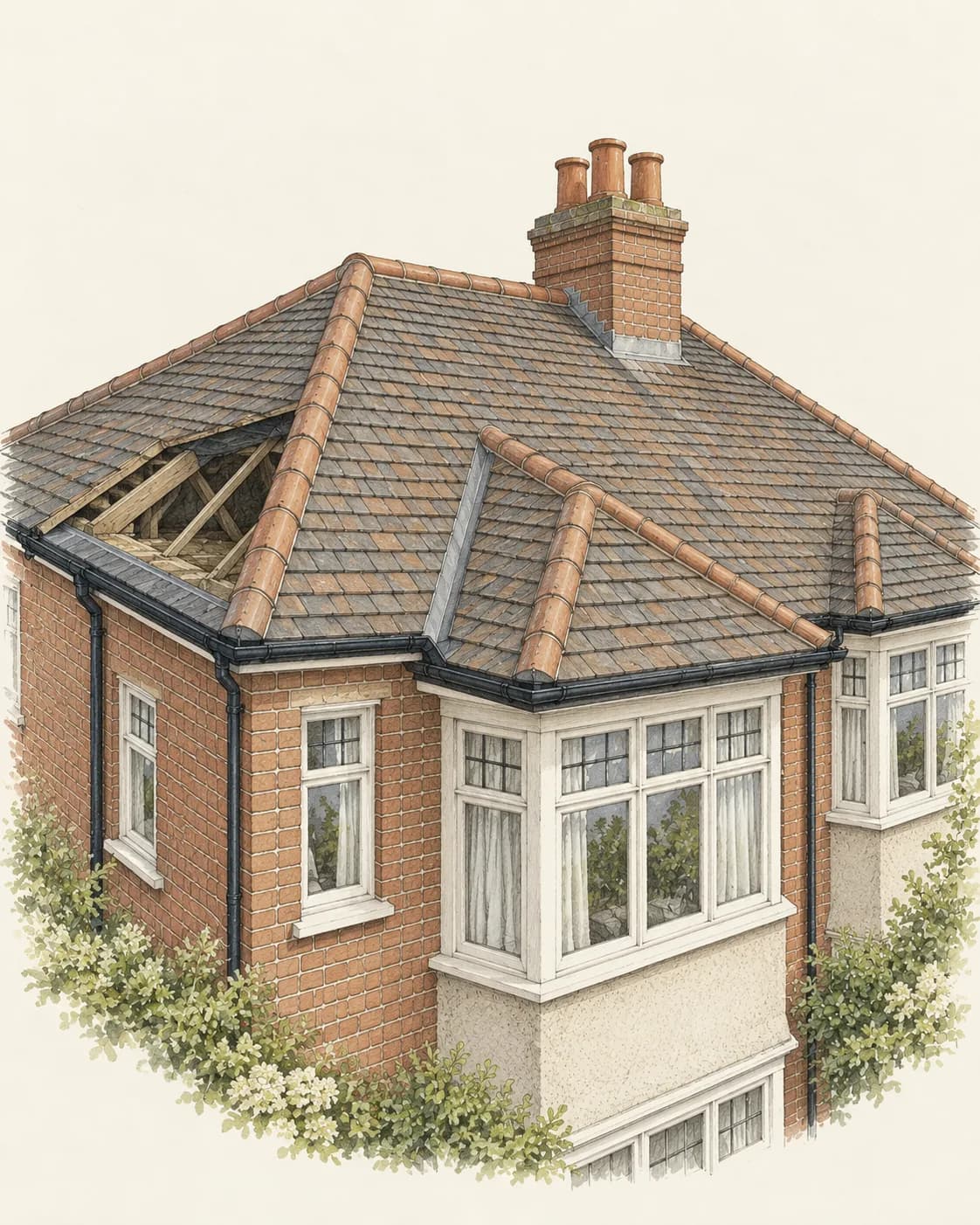
ROOF / A METHOD AND A SCOPE
Seen from above.Concealed below.
- 01Image
The surfaces the camera can see.
- 02Interpretation
A competent written assessment.
- 03Limitation
The structure and layers it cannot expose.
Fictional architectural illustration. Illustrative study · not a diagnosis or construction specification.
The answer
Separate the method of taking pictures from the scope of professional advice.
A drone is an inspection tool. What you receive may range from a set of images to a written roof-condition assessment. Confirm who interprets the evidence, which roof areas are covered and how internal observations or further access will be considered.
The questions that matter
Define the enquiry.
- 01
Specify the roof question
Explain whether you need clearer evidence of a covering defect, inspection of a high junction or a broader condition assessment. A request for photographs and a request for a professional opinion can involve different work, competence and deliverables.
- 02
Combine the available views
Roof coverings, flashings, gutters and outlets need to be read with accessible internal staining and roof-space observations where relevant. A dry-looking aerial image does not settle whether water enters in different weather or whether a concealed timber is sound.
- 03
Check feasibility before booking
Weather, airspace restrictions, nearby people, obstacles and the aircraft’s operational category can limit flight. CAA rules vary with the operation and aircraft; being small does not remove every requirement. Ask the provider to assess the site and explain alternatives if a safe, lawful flight is not possible.
- 04
Agree reporting and exclusions
Confirm whether the fee includes labelled images, written observations, interpretation, limitations and recommended next steps. Ask who provides the professional advice and whether a return visit or another access method would be charged separately.
Read the evidence
What a camera can see—and what remains behind it.
A clear high-level image can preserve useful context at a valley, chimney flashing, gutter or roof penetration. It can also leave a question unanswered where a shadow, parapet, coating or overlapping material conceals the detail. Good reporting records the limitation rather than calling an unseen area satisfactory.
Aerial photographs do not load-test the roof, inspect beneath coverings or determine the condition of every support. A roof-space visit can reveal a different set of matters, but it too is limited by access, insulation and stored goods. A home survey considers the building more widely; a focused aerial instruction should not be sold as a substitute for every part of that inspection.
If the issue is disputed workmanship, tell the provider whether you need factual photographs, a condition opinion or advice intended for a dispute. Those instructions have different requirements. Agree the purpose and use of the deliverable in advance rather than assuming a photographic visit produces an expert-witness report.
Scope and limits
The view is only part of the service.
| Service | Useful for | Important limit |
|---|---|---|
| Ground-level observation | Overall roof form and visible details. | Distance and obstructions can prevent close assessment. |
| Aerial imagery | High-level surfaces and locations visible to the camera. | Does not expose concealed layers or certify structural adequacy. |
| Written roof assessment | Interpreting agreed evidence and defining next steps. | Its reliability depends on scope, access and competence. |
| Home survey | Considering roof findings alongside the wider property. | Additional specialist work can still be needed. |
From the archive
A detail, in context.
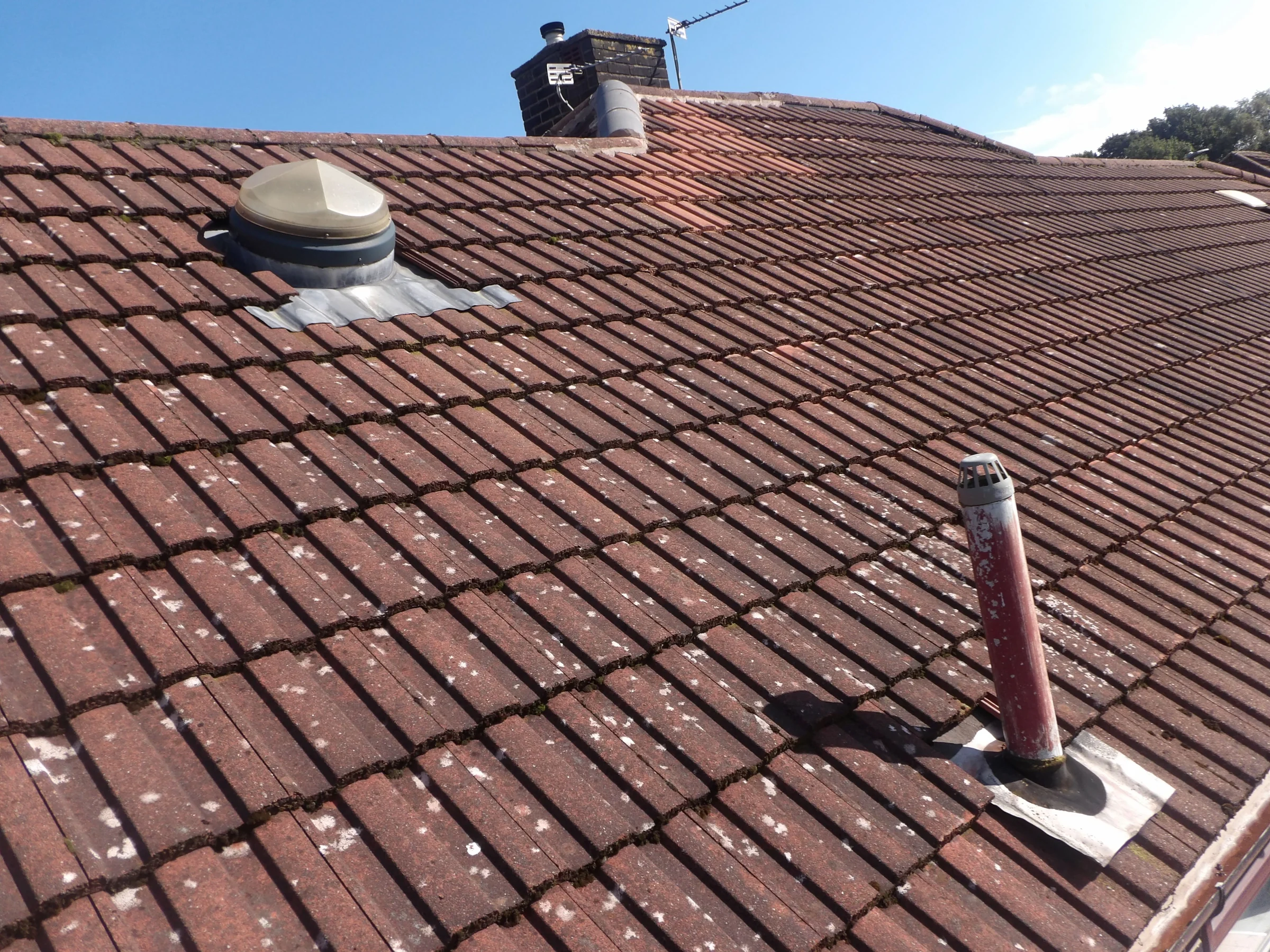
Vent pipes and flashings on a tiled roof
Vent pipes and flashings through a tiled roof slope. Real photograph from the survey archive.
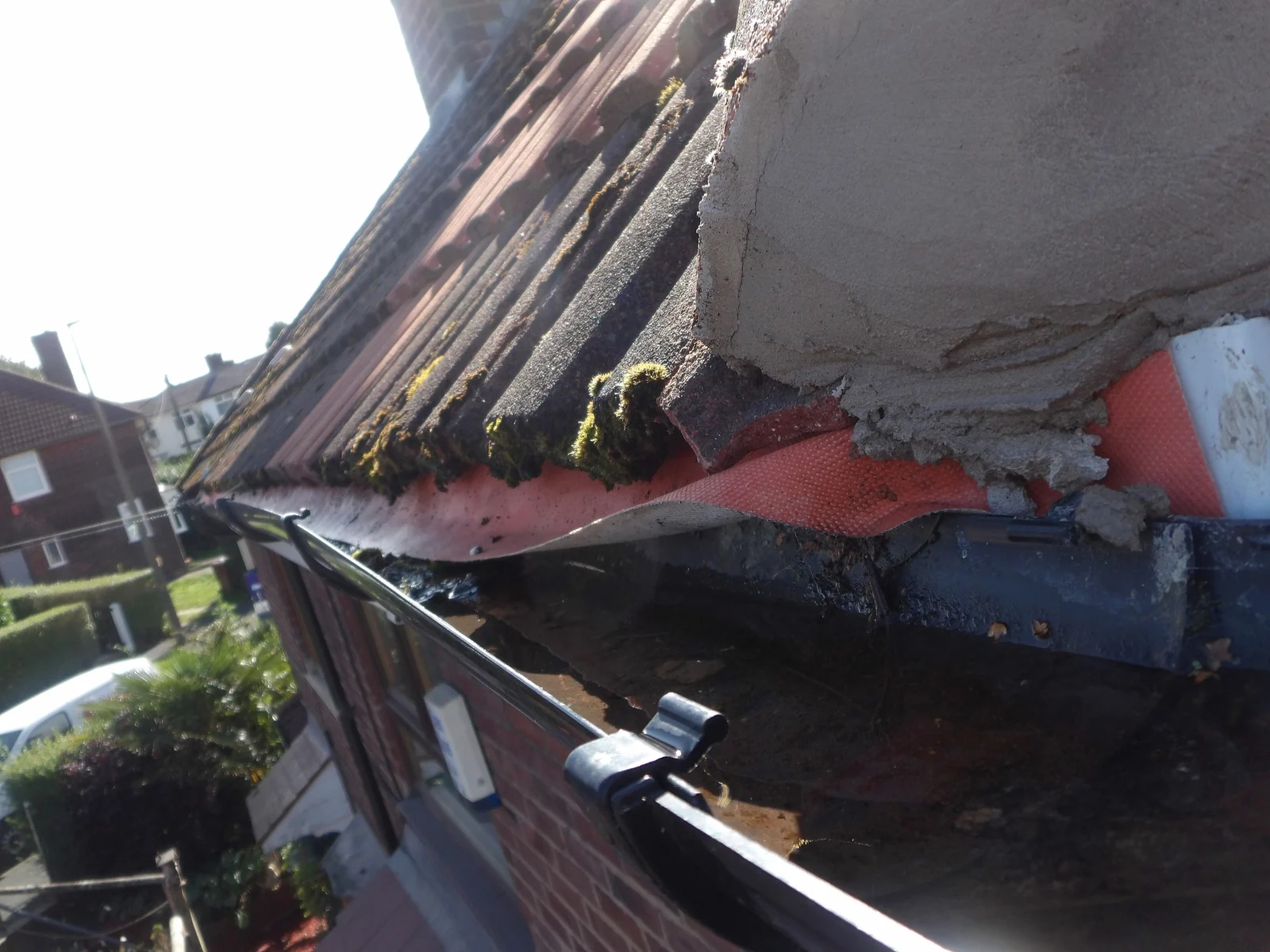
Roof underlay extending into the gutter
Roof underlay hanging into the gutter below the tiles, with water and debris in the channel. Real photograph from the survey archive.
Before you commit
Turn the finding into a useful instruction.
- 01
Describe the concern
Send the existing finding, intended use of images and relevant access information.
- 02
Ask who interprets it
Confirm the named adviser, written deliverable and limits—not just the camera resolution.
- 03
Plan for incomplete access
Agree what happens if conditions prevent flight and how significant unseen areas will be followed up.
Primary references
Read the source. Check the scope.
The decision rule
Resolve the significant unknowns with the right scope of professional advice before committing.
Help me choose a surveyQuestions
A few good
questions.
Talk to us 01Is a drone included in every SurveyChoice survey?
No. Any equipment or additional access method depends on the inspecting practice, site conditions and expressly agreed scope. Confirm it before booking if it matters to your decision.
02Can a drone prove there are no roof leaks?
No. Surface imagery cannot rule out every concealed defect or water route, particularly where conditions differ from the inspection day.
03Does the operator need to be a surveyor?
Flying competence and professional building assessment are different matters. Check who is responsible for the flight and who interprets the roof evidence.
04Is a drone always the best access method?
No. The roof, question, weather, surrounding area and lawful operation determine what is feasible. A provider may recommend another method or a combination of observations.