FURTHER INVESTIGATION
More checks.
One question.
An additional investigation is useful when it answers a defined question that the home survey could not safely or reliably settle within its scope.
Electrics, gas and services: what a survey checks
06 / REFERRAL DOSSIER
A question to answer.An instruction with purpose.
- 01The observation
Send the relevant report extract and photographs.
- 02The unknown
Ask precisely what remains unresolved and why.
- 03The instruction
Agree the specialist’s scope, access and written output.
Fictional architectural illustration. Illustrative study · not a diagnosis or construction specification.
The answer
Ask the reporting surveyor what remains unknown, why it matters and which specialist can answer it.
Commission the question, not simply a job title, and obtain the evidence needed for your purchase decision before exchange.
The evidence
Give each specialist a clear question.
- 01
Define the unknown
Is the issue electrical safety, a concealed support, damp causation, drain condition or possible active movement? Describe the location, symptoms and question using the original report extract so the specialist can scope the work.
- 02
Choose the right competence
An electrician tests circuits; a drainage specialist inspects drains; an engineer assesses structural adequacy where required. A general builder’s quotation can help price defined work but may not resolve a diagnostic question.
- 03
Arrange permission and access
Opening floors, removing panels, sampling or exposing structural details may need the seller’s explicit agreement. Ask who makes good, what access is safe and whether the inspection can proceed if permission is refused.
- 04
Request a written answer
The deliverable should state the inspected areas, methods, evidence, conclusions, limitations and next actions. A brief verbal assurance may leave the original uncertainty unresolved for the buyer, lender or conveyancer.
Read the detail
A deeper survey still has boundaries.
Level 3 provides a more detailed assessment than Level 2, but it is not an invasive investigation of every hidden component. It does not automatically include service testing, soil analysis or structural calculations.
If a specialist recommends further work, ask whether the reason is a newly identified concern, restricted access or a question outside that specialist’s own competence. Keep the evidence together and return it to the original surveyor where interpretation would help.
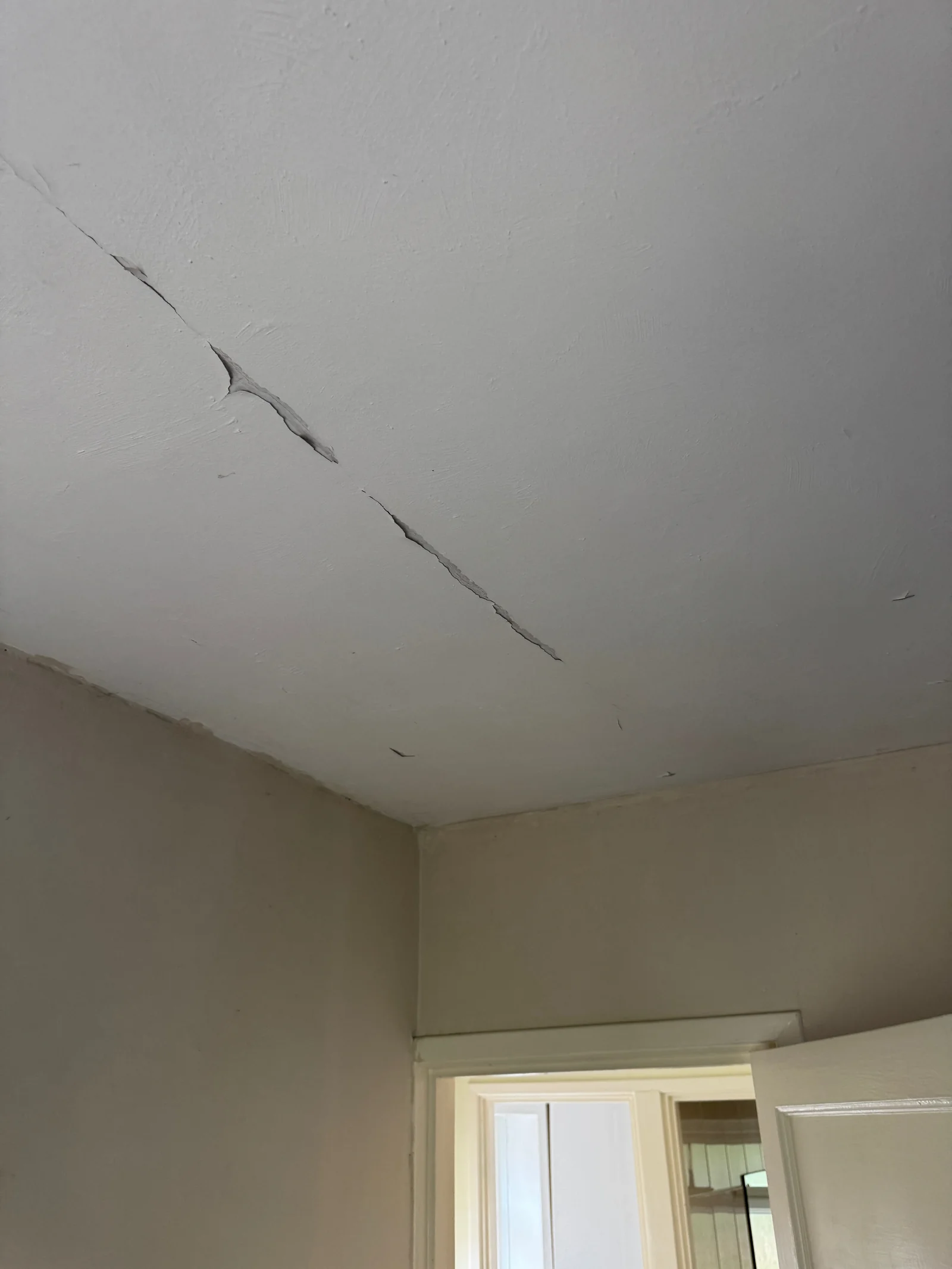
From observation to question
A crack is the starting point.
Before you commit
Make the next investigation count.
- 01
Prioritise before exchange
Ask which investigations are needed before exchange.
- 02
Share the relevant finding
Send each specialist the relevant report extract.
- 03
Agree the investigation
Agree scope, access, fee and delivery date in writing.
- 04
Review the answer
Check that the resulting report answers the original question.
Scope and sources
Know what you are booking.
SurveyChoice arranges home surveys with a named independent practice. The practice provides the inspection and professional advice. Discuss known concerns, specialist requirements and access before accepting its terms.
Continue with Electrics, gas and services: what a survey checks for the next part of this decision.
Further reference: RICS: choosing a home survey (opens in a new tab). Requirements depend on the property, agreed scope and jurisdiction.
The decision rule
Choose the scope from the property and resolve significant unknowns before committing.
Help me choose a surveyQuestions
A few good
questions.
Talk to us 01Can I wait until after completion?
That depends on the risk and your willingness to accept it. Significant unresolved matters are usually better investigated before legal commitment. Ask your surveyor and conveyancer about the specific finding.
02Does Level 3 eliminate specialist referrals?
No. It adds depth of analysis, but specialist testing or access may still be needed to answer a particular concern.