DRAINAGE REFERRAL
Below ground.
What is known?
A recommendation for a CCTV drain survey should identify the question to answer. Define the route, access, evidence and written findings before paying for an inspection.
Read the original referral
DRAINAGE / THE CONCEALED ROUTE
One chamber.A longer question.
- 01The opening
A local view of the chamber.
- 02The run
A defined length to investigate.
- 03The answer
Coverage and limits in writing.
Fictional architectural illustration. Illustrative study · not a diagnosis or construction specification.
The answer
A chamber view and a CCTV survey answer different questions.
A home survey can examine accessible drainage features within its agreed scope. It does not automatically trace or film every buried pipe. If the report recommends CCTV, send the relevant extract to the drainage specialist and agree what the inspection must establish.
The questions that matter
Define the enquiry.
- 01
Locate the concern
Identify the reported symptom: a damaged chamber, recurring blockage, discharge near foundations or cracking needing investigation. A drain defect is one possible explanation in some cases; the referral is not confirmation that drainage caused structural movement.
- 02
Define the coverage
Ask which foul and surface-water runs will be inspected, their start and end points and whether shared, off-site or inaccessible sections are included. Request a marked route or plan where tracing is required. Do not assume the title boundary and drainage responsibility are identical.
- 03
Agree access and cleaning
Confirm who will obtain access and permission, lift covers and arrange any cleaning. A blocked or submerged length may prevent a useful camera view. Agree how an incomplete inspection is reported and whether cleaning or a return visit costs extra.
- 04
Specify the deliverable
Request dated footage or images linked to locations, a written description of defects, inspected lengths, limitations and proportionate next steps. A quotation for lining or excavation is not a substitute for an intelligible condition report.
The survey itself
What a CCTV drain survey is, and what the report holds.
A CCTV drain survey is a camera inspection of the inside of buried pipes. A drainage contractor passes a camera along each run from a chamber or other access point, and the footage is used to identify defects and features in the pipes and chambers it reaches. It is a separate inspection from a home survey, carried out by a different specialist.
It is also not a drain test. LABC, which represents local authority building control teams, describes a drain test as an air or water test on new or altered drains, to show the pipes are properly connected and do not leak, and warns against confusing the two: LABC Front Door: what is a drain test (opens in a new tab).
There is a standard language for what the camera finds. The Manual of Sewer Condition Classification, published by WRc, was first issued in 1980 as a national standard defect coding system and is used by the UK water industry; its fifth edition includes a simplified coding system for inspecting domestic drains. Ask whether the report will code each defect and give its position along the run, so that another contractor or an engineer can read it: WRc: Manual of Sewer Condition Classification (opens in a new tab).
Whose pipe a defect is in matters as much as the defect. The Consumer Council for Water says a homeowner is responsible for the drain that serves only their property and runs beneath their own house, garden or drive, while the wastewater company is responsible for sewers and for shared pipework connecting to a public sewer. A defect in a shared length may therefore be the company’s to repair, which is one reason to ask for the route to be traced: CCW: who is responsible for drains and sewers (opens in a new tab).
Which company that is depends on where the house stands. Every town page on this site names the company that takes the waste water for its area, from the water industry’s published boundaries. Start from the town records.
Read the evidence
From a camera finding to a purchase decision.
A camera records the accessible inside of a drain. Its images can show matters such as displaced joints, roots, deposits or damaged pipework, subject to visibility and access. They do not, by themselves, measure the extent of water escaping into the surrounding ground or prove that a wall crack was caused by the drain. Other investigation may be needed to connect those questions.
Send the completed report back to the professional who made the referral. Where movement is involved, ask whether the results resolve the original concern or whether monitoring, testing or engineering advice is still required. Your conveyancer can establish relevant records, permissions and responsibilities; the drainage contractor should describe the inspected system rather than decide legal ownership.
Scope and limits
Read the limit beside the finding.
| Evidence | What it helps establish | What still needs asking |
|---|---|---|
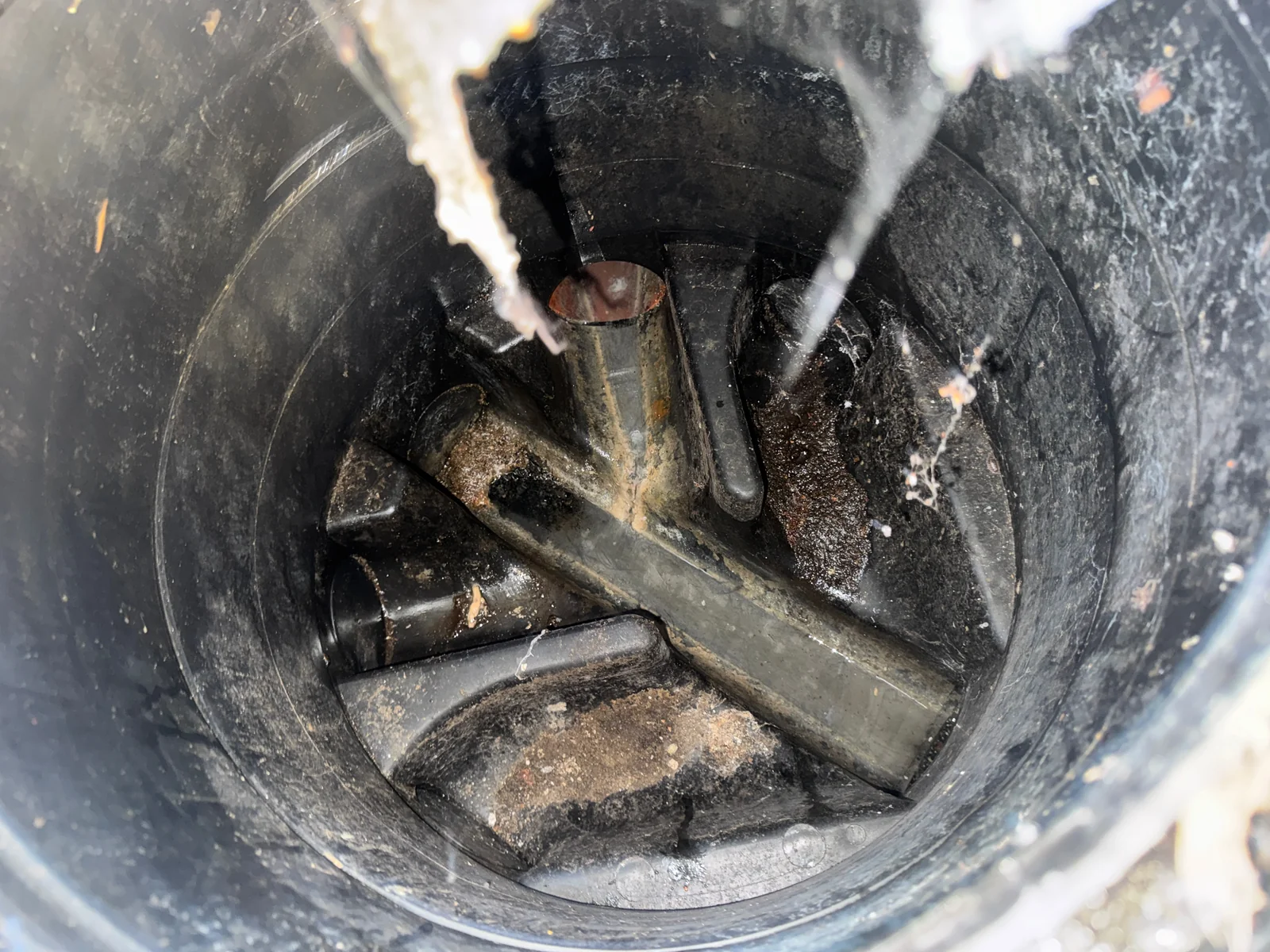
| Accessible chamber | A local view of channels, connections and visible condition. | What lies along the concealed runs? |
| CCTV footage | Condition inside the lengths reached by the camera. | Were all requested lengths accessible and visible? |
| Route tracing | The position or direction of an inspected pipe where tracing was commissioned. | How accurate is the location and depth information? |
| Proposed repair | The contractor’s response to identified defects. | Is further investigation needed, and does the work answer the original referral? |
From the archive
A detail, in context.
Before you commit
Turn the finding into a useful instruction.
- 01
Before instructing
Send the survey paragraph and ask the specialist to confirm coverage and exclusions in writing.
- 02
Before comparing prices
Check that quotations include the same cleaning, tracing, footage, written report and return-visit terms.
- 03
Before committing to purchase
Resolve significant unknowns with your surveyor and conveyancer rather than treating the arrival of footage as the end of the investigation.
Primary references
Read the source. Check the scope.
The decision rule
Resolve the significant unknowns with the right scope of professional advice before committing.
Understand further investigationsQuestions
A few good
questions.
Talk to us 01Does a Level 3 survey include CCTV drainage?
Not automatically. Inspection of accessible chambers and observation of ordinary operation are different from filming underground runs. Check the practice’s terms and any additional service expressly agreed.
02Will a drain survey prove subsidence?
No. It may identify drainage defects relevant to an investigation, but the connection to movement and the wider ground or foundation condition may need separate professional assessment.
03Can I use the seller’s drain report?
Ask when it was prepared, which lengths it covers, whether it addresses your survey’s concern and whether you can rely on it. Your adviser should check any missing work or restrictions on use.
04What is a CCTV drain survey?
A camera inspection of the inside of buried drains, carried out by a drainage contractor from chambers and other access points. The footage is used to identify defects and features in the pipes it reaches. It is a separate inspection from a home survey.
05Who is responsible for a defect in a shared drain?
The Consumer Council for Water says the wastewater company is responsible for sewers and for shared pipework connecting to a public sewer, and the homeowner for the drain serving only their own property. Your conveyancer and the company confirm it for the actual pipe.
06Can SurveyChoice arrange the specialist inspection?
The standard SurveyChoice booking is a Level 2 or Level 3 home survey. A separate drainage investigation is not automatically included; clarify the referral and any arrangements with the named practice.