TIMBER DECAY
Timber decay.
Trace wetting.
A damaged sill, a soft joist end and fungal growth call for different enquiries. Establish the moisture source, type of deterioration and extent before choosing a repair.
Commission the right investigation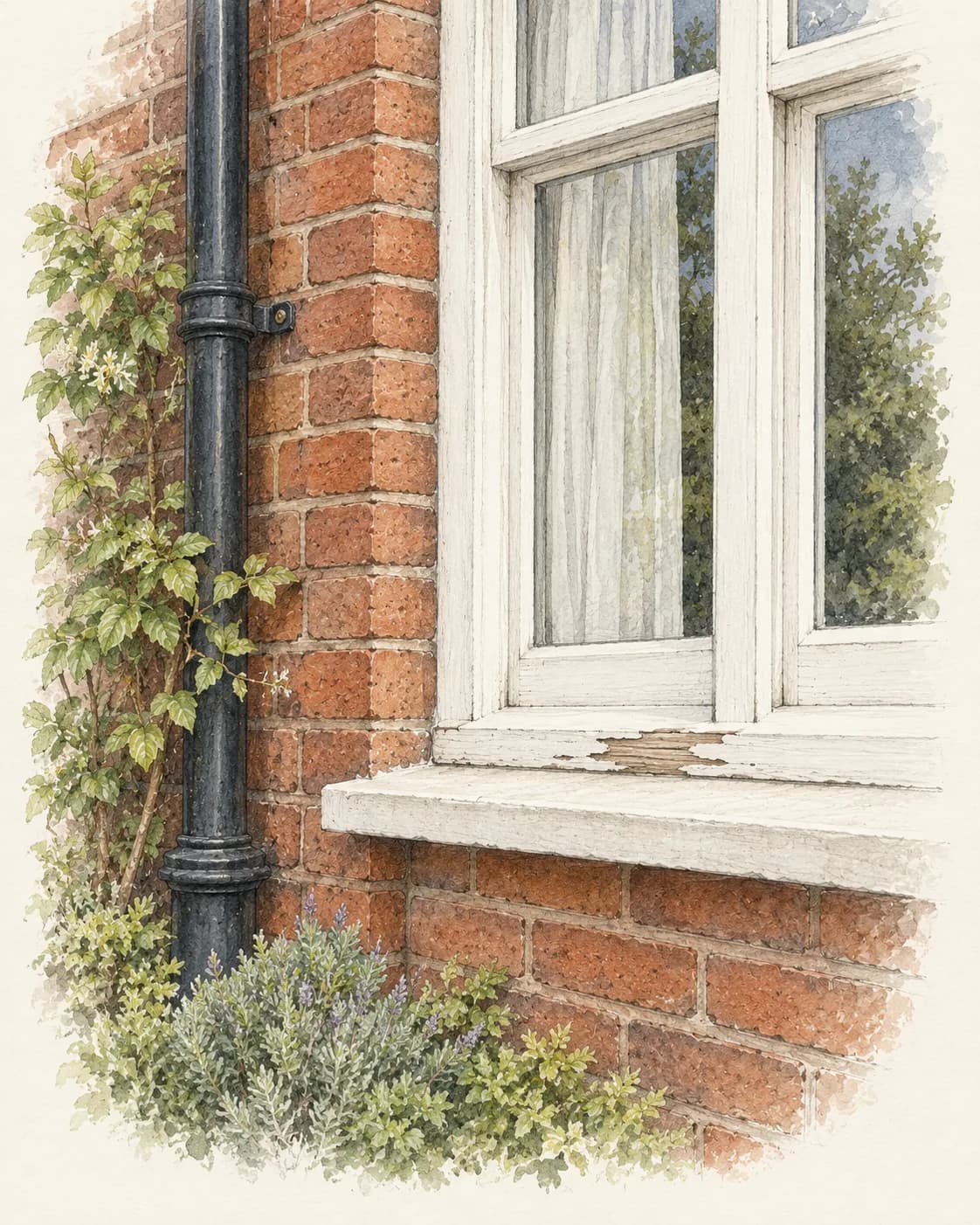
TIMBER / FOLLOW THE WETTING
The damaged end.The wider enquiry.
- 01Condition
What has actually deteriorated?
- 02Source
What keeps the timber wet?
- 03Extent
What remains behind the finish?
Fictional architectural illustration. Illustrative study · not a diagnosis or construction specification.
The answer
The useful diagnosis explains the affected timber and the conditions sustaining the damage.
Dry rot and wet rot are forms of fungal timber decay associated with moisture. The name “dry rot” does not mean the problem began in dry wood. A home survey may identify visible deterioration or suspected decay while leaving the organism, concealed extent and structural effect unresolved.
The questions that matter
Define the enquiry.
- 01
Separate symptom from identification
Peeling paint, staining, cracking or a musty smell can justify closer investigation, but none alone confirms a fungal species. Ask whether the report records observed decay, suspected decay or an identified fungus, and what evidence supports that wording.
- 02
Follow the moisture
Consider relevant rainwater defects, plumbing, external levels, roof details and ventilation together. Treating visible timber while leaving the wetting mechanism unresolved can leave the underlying problem in place. A single wall-meter indication cannot establish the cause of timber decay.
- 03
Establish the extent
Accessible joinery and concealed structural timber carry different implications. Identify which bearings, floor areas or roof members were reached and what remains hidden. Opening up needs a defined purpose, the owner’s permission and precautions appropriate to the building and materials.
- 04
Assess function as well as appearance
The importance of deterioration depends on the timber’s role, section, connections and supported loads. Repairing a decorative sill is a different instruction from assessing a weakened floor support. Significant structural concerns may need an engineer as part of the investigation.
Read the evidence
A label is only one part of the repair brief.
An investigation should explain the evidence for the diagnosis, likely moisture routes and affected locations, with photographs or a plan that let the reader find them again. It should distinguish the timber examined from adjacent areas that could not be reached. Where the cause or extent cannot yet be determined, ask what access or tests would change that assessment.
Dry rot can require investigation beyond the visibly damaged timber. Wet rot can also seriously weaken a structural member. Neither a reassuring label nor a frightening one replaces an assessment of extent and function. The appropriate repair depends on controlling moisture, assessing what can be retained and specifying any necessary timber repair or replacement.
Ask whether the investigator also sells remedial work and whether the inspection fee buys a written diagnostic report. Compare the proposed scope, access, drying strategy and structural work before comparing chemical-treatment prices. A guarantee describes its own terms and exclusions; it does not establish that the original diagnosis was complete.
Scope and limits
Different names. Shared questions.
| Question | Dry rot | Wet rot |
|---|---|---|
| What does the name mean? | A particular fungal decay associated with damp timber; it does not thrive without suitable moisture. | A group of fungal decays associated with wet timber, rather than one single species. |
| Can appearance settle it? | Visible growth may be informative, but identification and concealed extent need competent assessment. | Darkening or softness needs interpretation; the name cannot be assigned from a stain alone. |
| What changes the urgency? | Extent, spread, concealed involvement and the function of damaged members. | The same structural question matters, even if damage appears localised. |
| What should the brief cover? | Moisture control, extent, access and suitable repair. | Moisture control, extent, access and suitable repair. |
From the archive
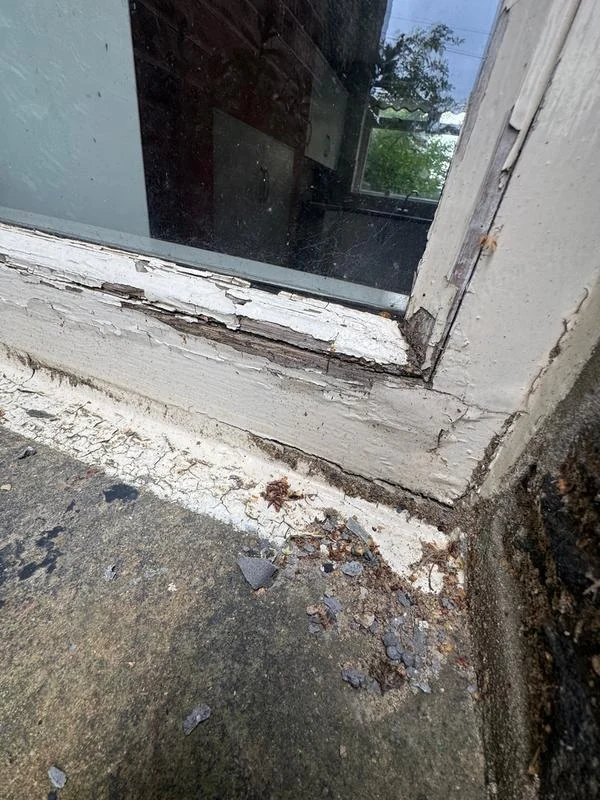
A detail, in context.
Before you commit
Turn the finding into a useful instruction.
- 01
Clarify the wording
Ask the original surveyor what was seen and whether a specialist diagnosis remains outstanding.
- 02
Define the access
Agree the areas to inspect, permissions and how concealed bearings will be addressed.
- 03
Bring the answer together
Obtain the written findings and review significant repair or structural implications before exchange.
Primary references
Read the source. Check the scope.
The decision rule
Resolve the significant unknowns with the right scope of professional advice before committing.
Understand further investigationsQuestions
A few good
questions.
Talk to us 01Can dry rot be diagnosed from a photo?
A photograph can record useful signs, but it cannot establish every concealed area, the full extent of deterioration or structural adequacy. Ask for a competent inspection and an explanation of the diagnosis.
02Is wet rot always a minor problem?
No. Damage to a member carrying a floor or roof can matter even when it is localised. Its role and condition need assessing.
03Does my home survey include opening floors?
A standard home survey is subject to agreed access and inspection limits. Do not assume fixed coverings or structural fabric will be opened. A specialist investigation may require separately arranged access.
04Do I need a PCA member?
Check the exact wording of any lender or insurer requirement. A firm’s membership, an individual qualification and the scope of a particular investigation are separate matters.