OLDER HOMES
Victorian.
Read its age.
Solid walls, suspended floors, traditional roof structures and generations of alterations make an older home rewarding to understand and easy to misread.
Listed building survey: scope and cost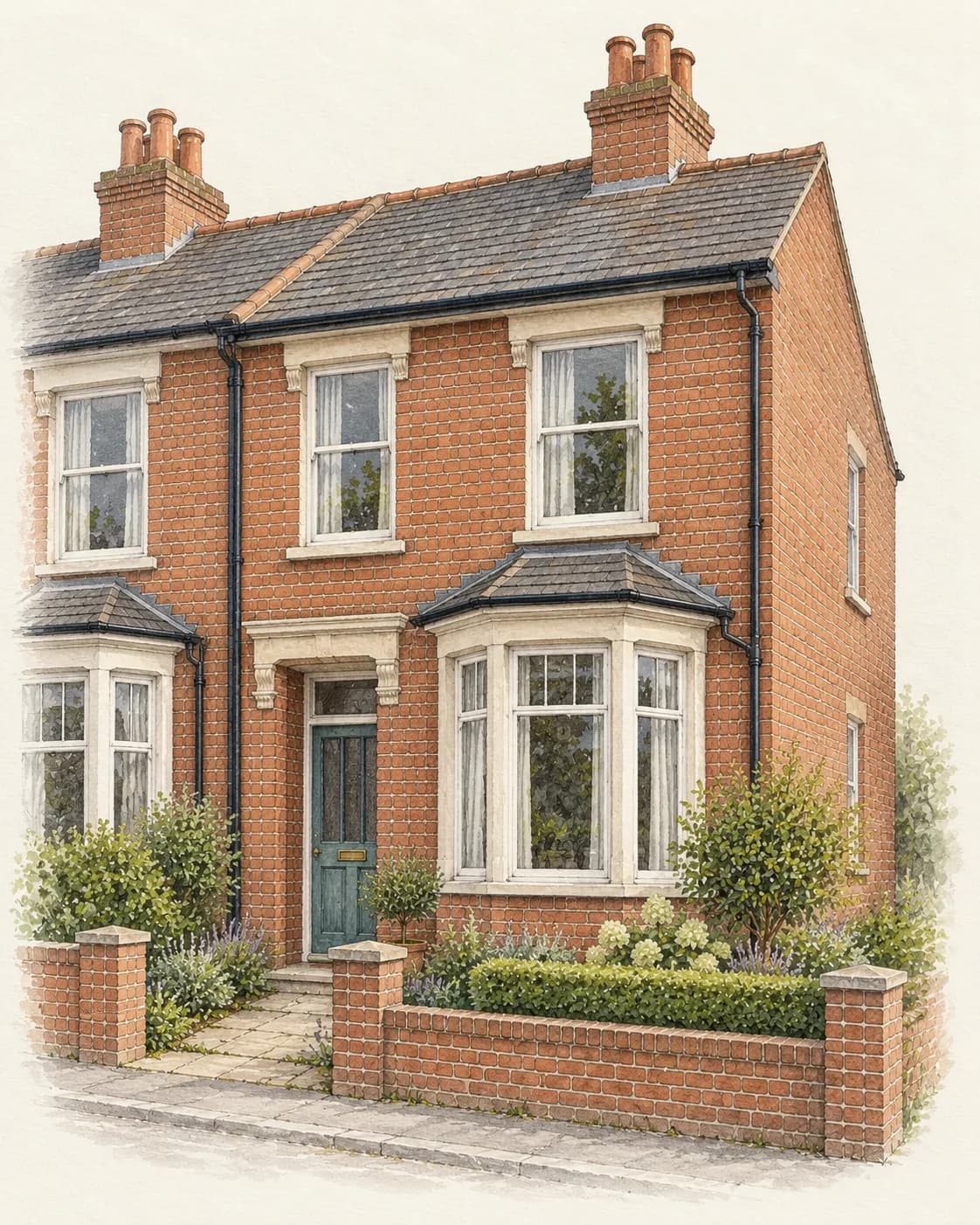
04 / FABRIC PORTRAIT
Read the layers.Original. Repaired. Altered.
- 01Above the eaves
Chimneys, coverings and rainwater details.
- 02Across the façade
Masonry, pointing, windows and later changes.
- 03Below the floor
Ground levels, ventilation and accessible timber.
Fictional architectural illustration. Illustrative study · not a diagnosis or construction specification.
The answer
A Level 3 is often appropriate for a Victorian house, particularly where it is altered or in poor condition.
Ask about experience of traditional construction and provide the alteration history; age alone does not describe the whole scope.
The evidence
Read the original fabric and the alteration story.
- 01
Walls and moisture
Traditional solid walls behave differently from modern cavity construction. Raised ground, blocked ventilation, leaking gutters and unsuitable finishes can contribute to damp. A high meter indication alone does not identify its cause.
- 02
Roof and chimneys
Consider weathering, flashings, chimney maintenance and structural alterations together. A heavier replacement covering, cut roof members or a removed chimney breast may introduce questions beyond the age of the slates.
- 03
Floors and ventilation
Suspended timber floors rely on appropriate ventilation and dry supports. Carpets and fitted furniture can hide problems. Local movement or unevenness needs assessment, not an assumption that all old floors are either defective or harmless.
- 04
Later changes
Extensions, loft conversions, removed walls, replacement windows and service upgrades may matter more than the original building date. Ask for the relevant design, approval and maintenance records.
Read the detail
Separate maintenance from a purchase-changing defect.
Older buildings commonly need planned maintenance, but a survey should distinguish routine work from significant structural concerns, unsafe installations or poorly executed changes. Request a discussion of priorities and further investigations rather than simply counting red entries.
Where repair costs will affect the purchase, ask for a suitable repair approach before obtaining quotations. A quote for impermeable render or injected treatment may not answer the mechanism identified in traditional masonry.
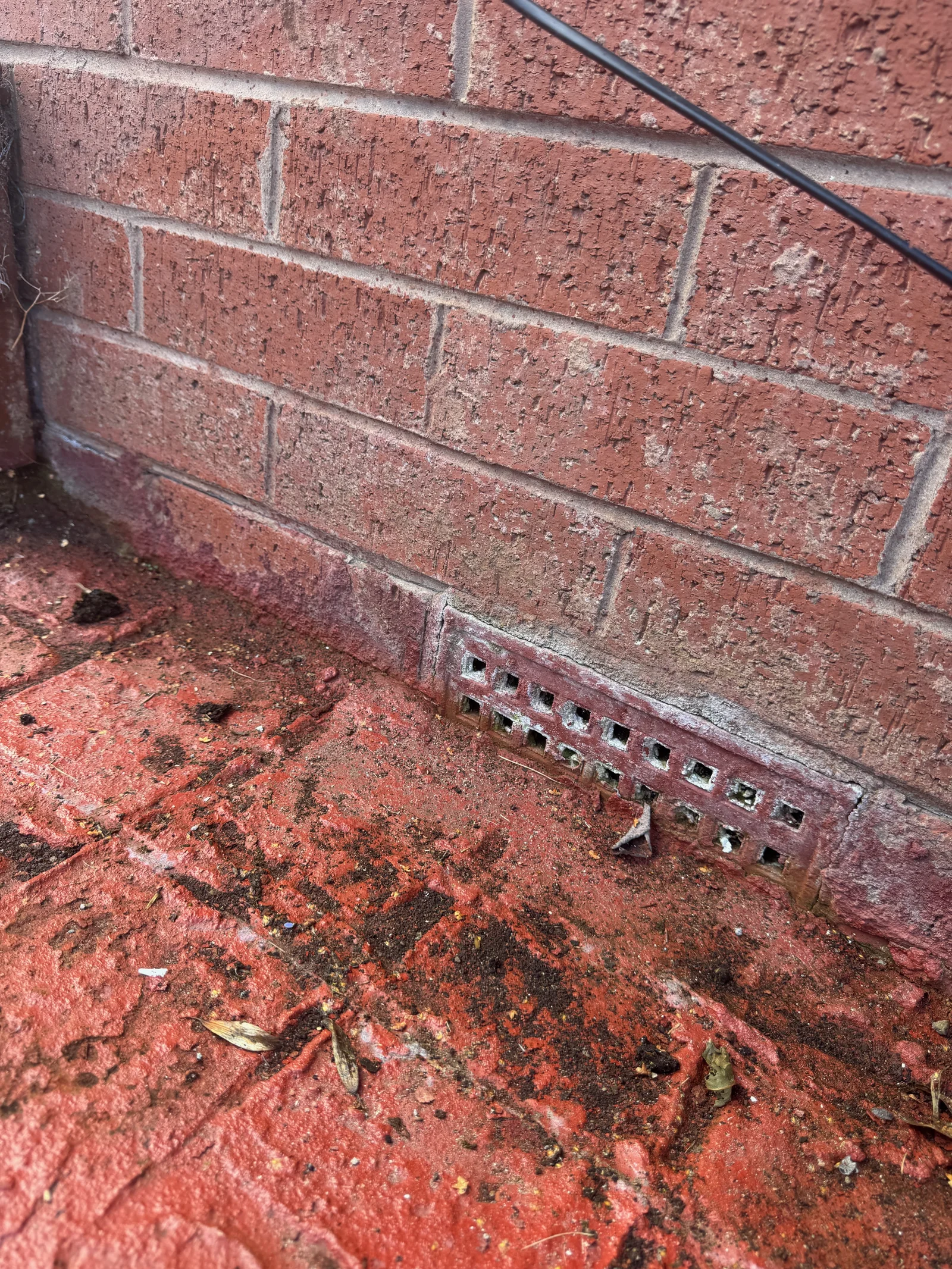
At ground level
A small opening. A bigger question.
Before you commit
Prepare for a home with history.
- 01
Brief the practice on alterations
Share known alterations and specific concerns before inspection.
- 02
Arrange safe inspection access
Arrange clear loft access and safe access to relevant rooms.
- 03
Discuss the repair priorities
Discuss repair priorities after reading the report.
- 04
Resolve the remaining evidence
Obtain specialist evidence for unresolved matters before exchange.
Scope and sources
Know what you are booking.
SurveyChoice arranges home surveys with a named independent practice. The practice provides the inspection and professional advice. Discuss known concerns, specialist requirements and access before accepting its terms.
Continue with Listed building survey: scope and cost for the next part of this decision.
Further reference: RICS: choosing a home survey (opens in a new tab). Requirements depend on the property, agreed scope and jurisdiction.
On the record
Where older homes are most common.
The Valuation Office Agency records when each home on the council tax list was built. Its oldest band is before 1900, which takes in Victorian houses and anything earlier. A town’s share is context for your questions. It is not a finding about the house you are buying.
Homes built before 1900
Across England and Wales, 15% of homes were built before 1900. The marker on each bar shows that share.
The highest shares
- TrawdenNorth West, 860 homes51%
- Hebden BridgeYorkshire & Humber, 3,210 homes50%
- SlaithwaiteYorkshire & Humber, 2,450 homes50%
- TodmordenYorkshire & Humber, 7,370 homes49%
- PadihamNorth West, 5,280 homes46%
- ColneNorth West, 9,860 homes45%
- RishtonNorth West, 3,210 homes45%
- AccringtonNorth West, 15,080 homes42%
The largest places we cover
- BirminghamWest Midlands, 460,490 homes12%
- LiverpoolNorth West, 254,710 homes25%
- LeedsYorkshire & Humber, 253,510 homes12%
- SheffieldYorkshire & Humber, 238,400 homes12%
- ManchesterNorth West, 222,330 homes17%
- LeicesterEast Midlands, 161,610 homes19%
- CoventryWest Midlands, 152,410 homes4%
- NottinghamEast Midlands, 136,940 homes12%
Each figure describes an area, not a home: it is context for your questions and says nothing about the property you are buying. A town’s name opens its Level 3 page, where its whole record is set out.
Council Tax: stock of properties 2026, table CTSOP4.1, Valuation Office Agency, as at 31 March 2026. Source: Valuation Office Agency, licensed under the Open Government Licence v3.0. How each area is measured.
See all 316 towns by this figureThe decision rule
Choose the scope from the property and resolve significant unknowns before committing.
Help me choose a surveyQuestions
A few good
questions.
Talk to us 01Does every Victorian house need Level 3?
Level 3 is often suitable, but the practice should recommend the scope from construction, condition, complexity and your needs. Ask before selecting solely by age.
02Are uneven floors normal in an old house?
Some historic unevenness can be longstanding. New movement, decay, inadequate support or significant distortion need investigation; age is not a diagnosis.