SUSPECT MATERIALS
Suspected.
Not confirmed.
A home survey can flag a material that may contain asbestos. Establish the location, condition and intended work, then agree the appropriate specialist investigation.
Understand a specialist referral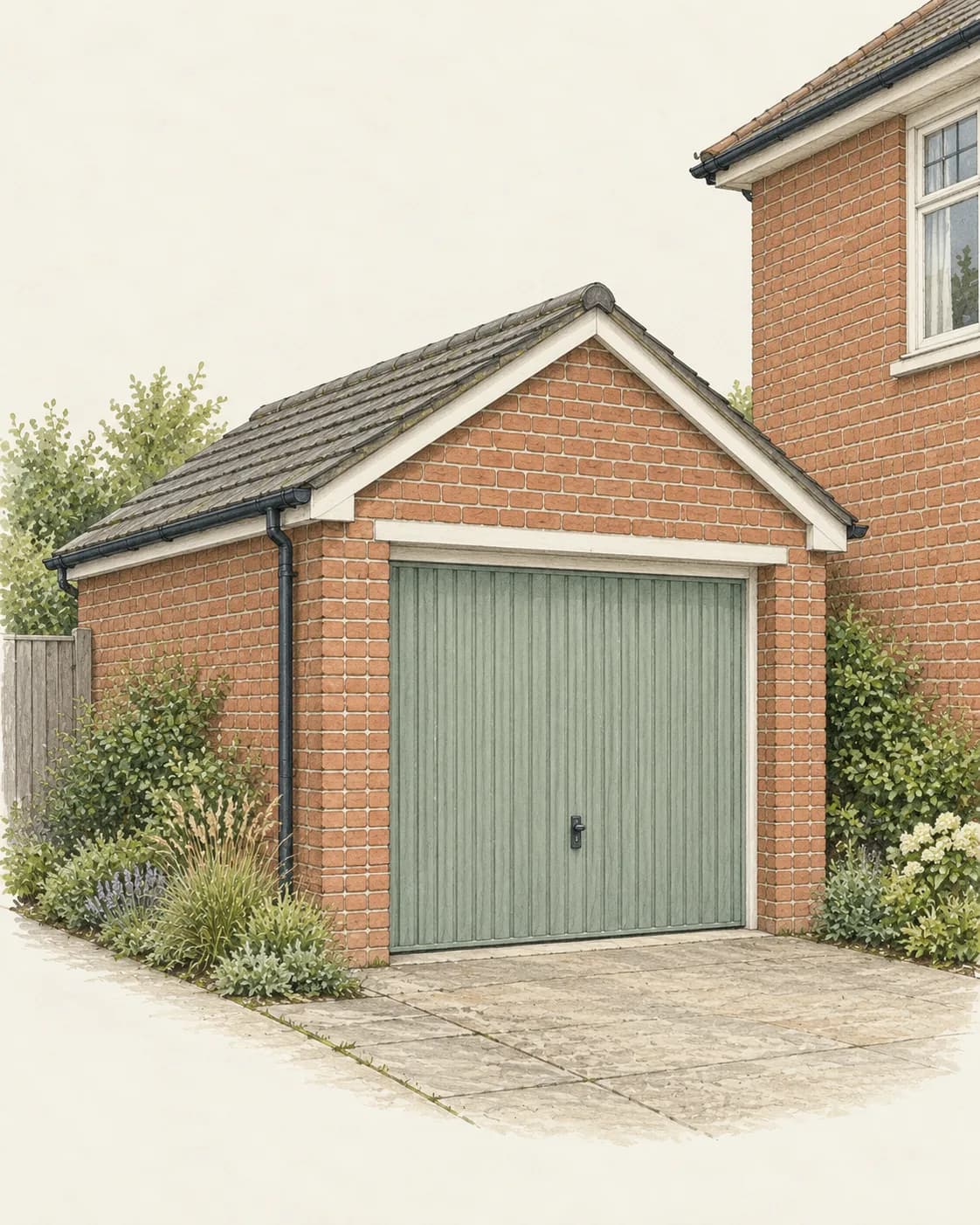
MATERIAL / FROM SUSPECT TO RESULT
The material question.Appearance is not confirmation.
- 01Locate
Identify the exact material.
- 02Investigate
Competent sampling and scope.
- 03Interpret
Read the result with its limits.
Fictional architectural illustration. Illustrative study · not a diagnosis or construction specification.
The answer
A suspected material is a reason for an enquiry, not a laboratory result.
The appearance or age of a material may raise concern, but confirming asbestos requires representative sampling and analysis. Do not scrape, drill or remove a suspect finish to check it yourself. Ask a competent specialist what inspection is appropriate to the purchase and any planned work.
The questions that matter
Define the enquiry.
- 01
Pin down the finding
Locate the material identified in the report and distinguish “suspected”, “presumed” and “confirmed by analysis”. Record its apparent condition and whether proposed works would disturb it. A photograph of one panel cannot establish every similar-looking material in the building.
- 02
Match the survey to the purpose
A survey for ongoing occupation and a survey before refurbishment or demolition have different purposes and levels of intrusion. Tell the specialist which areas you intend to alter. A general home survey or a few isolated samples should not be presented as a complete refurbishment survey.
- 03
Use competent sampling and analysis
Ask how representative samples will be taken safely and analysed, how locations will be recorded and which areas remain uninspected. HSE recommends suitably trained and competent sampling and accredited laboratory analysis. Check competence and the scope of the proposed service.
- 04
Plan around the result
A confirmed result needs to be read with the material’s condition, location and likelihood of disturbance. Management, repair and removal are different responses. If work is required, ask appropriately competent advisers or contractors to specify the method and any applicable licensing or notification requirements.
Read the evidence
Before refurbishment, ask a different question.
A buyer planning to redecorate an occupied room has a different brief from one removing ceilings, opening risers or replacing an entire bathroom. Explain the actual work before requesting an asbestos quotation. Some materials or locations may only be reached through intrusive inspection, so access and making good need agreement with the seller.
A negative result relates to the material sampled and the reliability of that sampling. It is not automatically an asbestos-clear certificate for the whole property. Ask for a location schedule, sample results and a clear list of excluded rooms, concealed spaces or materials. Reconcile these with the scope of the planned works.
Asbestos in a building does not automatically mean every affected component needs immediate removal. Equally, an intact-looking surface does not justify disturbing it. Establish a safe plan before work begins and resolve significant uncertainties affecting the purchase with your surveyor and conveyancer. Do not allow a general web guide to substitute for material-specific advice.
Scope and limits
Three documents. Three different jobs.
| Document | Purpose | Boundary to check |
|---|---|---|
| Home survey finding | Records visible concerns and recommends further enquiries within the home-survey scope. | Usually does not include asbestos sampling or an asbestos-specific inspection. |
| Sample analysis | Reports whether the submitted sample contains asbestos. | Check that the sample and exact location match the material you are concerned about. |
| Asbestos survey | Investigates agreed areas for a specified management or works purpose. | Read the survey type, access restrictions, assumptions and uninspected areas. |
| Removal quotation | Prices an agreed work specification. | It is not, by itself, evidence that the whole building has been surveyed. |
Before you commit
Turn the finding into a useful instruction.
- 01
Send the exact paragraph
Give the specialist the survey extract, locations and photographs without treating the report wording as a confirmed analysis.
- 02
Describe intended work
Explain what will be cut, removed or exposed and obtain the owner’s permission for access or sampling.
- 03
Read the result and limits
Review laboratory findings alongside the location schedule, omissions and any work recommendations before making decisions.
Primary references
Read the source. Check the scope.
The decision rule
Resolve the significant unknowns with the right scope of professional advice before committing.
Understand further investigationsFrom an issued report
See the finding in context.
Questions
A few good
questions.
Talk to us 01Can asbestos be identified from a photograph?
No definitive confirmation can be made from appearance alone. Representative sampling and analysis are needed to confirm a suspect material.
02Will a Level 3 survey test for asbestos?
Do not assume so. A standard home survey can flag visible concerns but is not automatically an asbestos survey and does not automatically include sampling.
03Does a positive result mean I must remove everything?
No automatic decision follows from the name alone. Condition, location, disturbance and planned work need specialist assessment and an appropriate management or work plan.
04Is an asbestos survey included in the SurveyChoice price?
Not automatically. The standard booking covers the agreed Level 2 or Level 3 home survey. A separate asbestos investigation needs an appropriate specialist and expressly agreed scope.